
Clarke County Warrant Channels
Clarke County warrant records start with the office that created or served the paper. The Magistrate Court warrant application process is the local path for private-citizen applications, bad-check matters, pre-warrant hearings, and some criminal arrest warrants. The Sheriff's Office serves criminal warrants, subpoenas, civil papers, and evictions, but service by the sheriff does not mean the sheriff owns the full court file. Superior Court, State Court, Magistrate Court, and Municipal Court can each be part of the warrant trail.
No official countywide active-warrant search field was located in the public sources reviewed for Clarke County. That point matters. A wanted or fugitive page may show selected people, and the sheriff's civil paper search may show civil-process records, but neither should be treated as a complete list of active arrest warrants. For a real status check, use the issuing court, the Clerk of Superior and State Court for Superior or State Court cases, Municipal Court for failure-to-appear matters, or an attorney call when arrest risk is present.
The official Magistrate Court warrant application page is the lead source for citizen-filed criminal warrant requests in Clarke County.
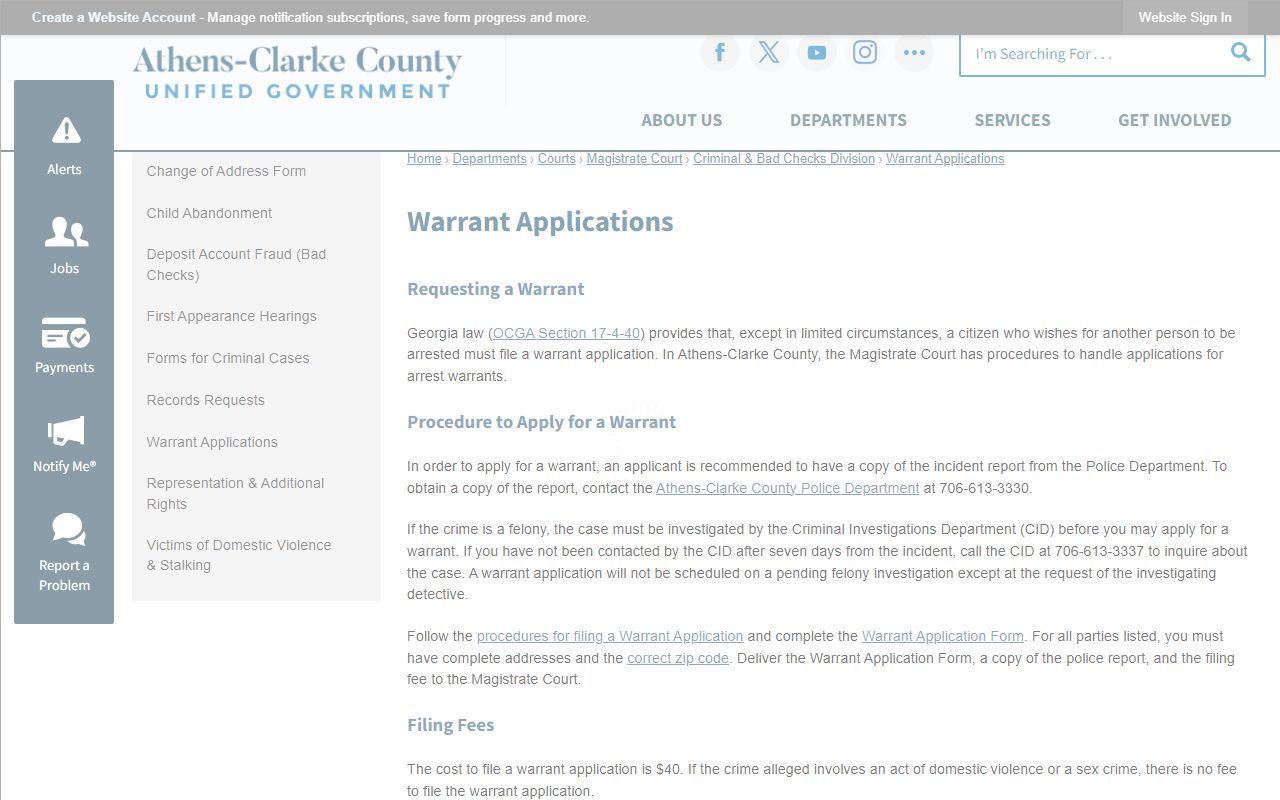
That source shows why a Clarke County warrant search must distinguish an application from an issued arrest warrant.
Types of Clarke County Warrants
Several warrant-related records can appear in Clarke County court and sheriff systems. An arrest warrant authorizes law enforcement to take a person into custody. A bench warrant is usually issued by a judge after a missed court date or failure to comply with a court order. A search warrant authorizes a search and may be sealed while an investigation is active. A capias or failure-to-appear order can be used to bring a person back before court.
Magistrate Court handles warrant applications, pre-warrant application hearings, preliminary hearings, bad-check matters, and first appearances after arrest. Municipal Court can issue failure-to-appear warrants when a person misses a court date and has not paid a fine in full. Superior and State Court records may show warrants, bond orders, case dispositions, and later court action in felony, misdemeanor, or State Court traffic matters.
- Arrest warrant: a court order allowing law enforcement to arrest a named person.
- Bench warrant: a judge-issued warrant, often tied to a missed court date.
- Search warrant: a court order for a search, not a public people-search list.
- Failure-to-appear warrant: a warrant tied to an unresolved court date or unpaid payable case.
- Civil process: sheriff-served papers such as subpoenas, protective orders, evictions, and garnishments.
How to Search Clarke County Warrants
Start with the record type. If the issue is a private-citizen criminal complaint, use Magistrate Court. If the issue is a traffic or ordinance failure to appear, use Municipal Court. If the issue is a felony, State Court misdemeanor, or case already filed in Superior or State Court, use the Clerk of Superior and State Court. If the person may already be in custody, check the current inmate list after the published delay and call the jail for official status.
- Identify the court that created the warrant or case. Use the citation, case number, court notice, police report, or charging document if one is available.
- For Magistrate warrant applications, contact Magistrate Court or review the warrant application instructions and criminal forms.
- For Municipal Court failure-to-appear matters, contact Municipal Court before the hearing date when possible and ask about payment, appearance, warrant fees, and DDS reporting.
- For Superior or State Court cases, search or call the Clerk of Superior and State Court and use the criminal phone option when a case number exists.
- If arrest has occurred, check the jail's current inmate list after the 24-hour delay and confirm first appearance or bond with the jail or court.
Clarke County also has a sheriff civil-paper search that accepts a name or case number. It can help locate subpoenas, summonses, evictions, protective orders, garnishments, foreclosures, and related service papers. It is not a full criminal active-warrant database.
The Sheriff civil papers search is useful when a warrant-adjacent question involves service of process rather than an arrest warrant.
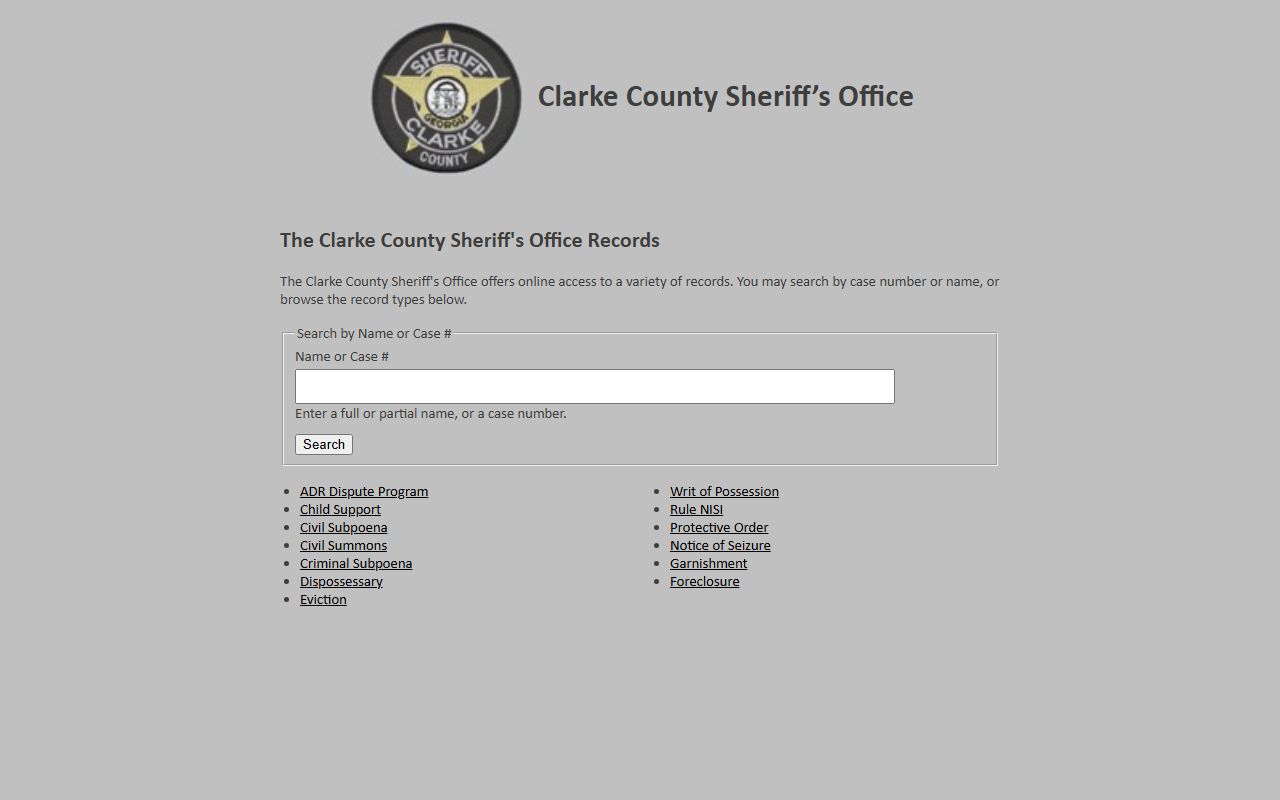
The civil-paper search gives Clarke County users a name or case-number channel for served papers, while criminal warrant status still requires the issuing court or sheriff contact.
Clarke County Warrant Search Fields
The research did not locate a single public Clarke County active-warrant form. The best field inventory comes from the official warrant application process, the sheriff civil-paper search, and court records-request channels. Those fields show what the local offices need to match a person, case, or paper to the right record.
| Field Label | Type | Required | Options / Format Notes |
|---|---|---|---|
| Name or Case # | Text | Optional or unspecified | Sheriff civil-paper search accepts a full or partial name, or a case number. |
| Complete address and ZIP | Text | Yes for warrant applications | Magistrate warrant applications require complete addresses and correct ZIP codes for all parties. |
| Police report | Attachment or copy | Yes for warrant applications | A copy of the police report is filed with the warrant application form. |
| Case number | Text | Helpful | Used by courts, the Clerk, and sheriff service channels to locate records. |
| Charges or alleged offense | Text | Helpful | Helps identify the case and may affect the Magistrate application fee waiver. |
| Arrest or filing date | Date | Helpful | Magistrate records requests ask for dates when available. |
The Magistrate Court criminal forms page supports the warrant application process when a person is preparing the required paperwork.
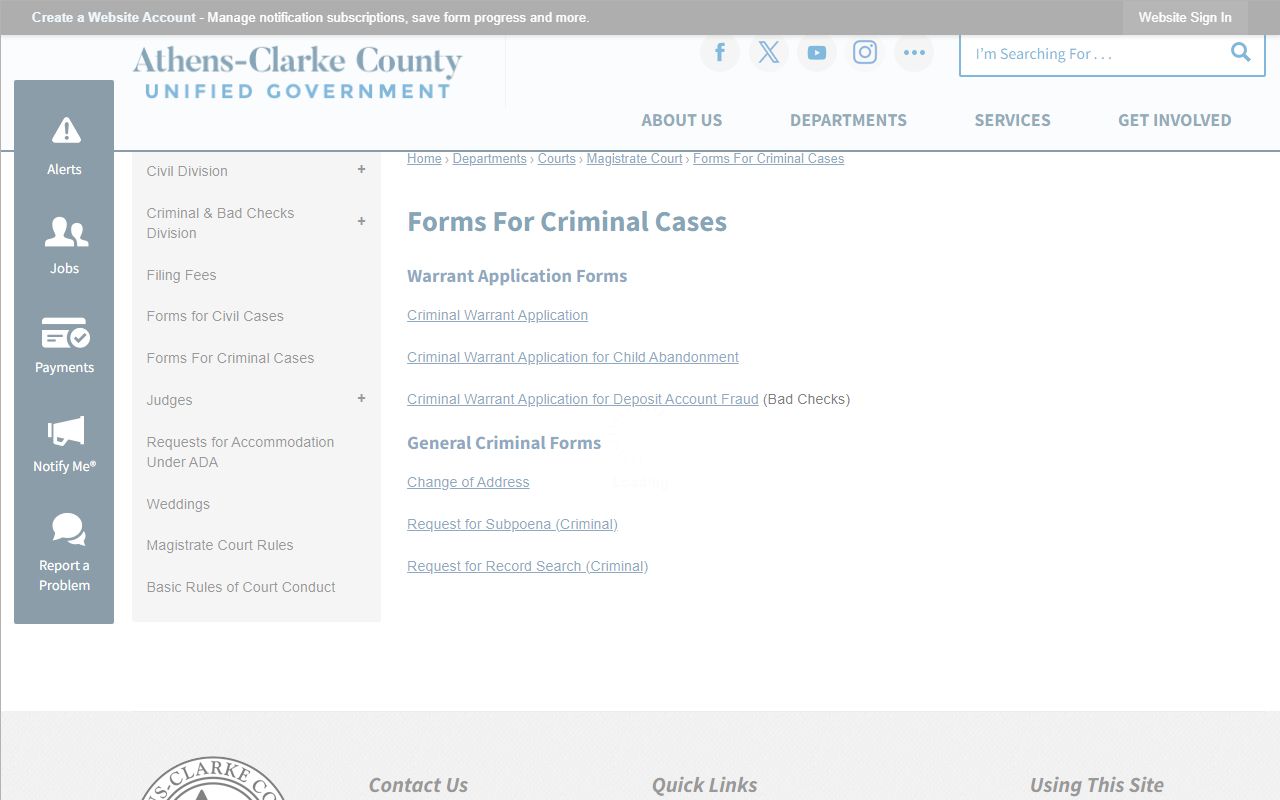
Using the correct form and identifiers reduces the risk that a Clarke County warrant request is rejected or matched to the wrong person.
What Clarke County Warrant Records Show
A warrant record is not always a single public screen. In Clarke County, the public trail can include the application, the issuing court, a civil-paper service entry, a criminal case docket, a bond order, a jail booking entry, or a Municipal Court failure-to-appear note. The court record controls the legal status. Sheriff and jail records may show service or custody facts, but they do not replace the issuing court's file.
| Field | What It Shows |
|---|---|
| Person name | Identifies the person named in the application, case, service paper, or warrant record. |
| Address / ZIP | Required party location data for Magistrate warrant applications. |
| Police report | Required support for a Magistrate warrant application. |
| Alleged offense | Shows the conduct at issue and whether a domestic-violence or sex-crime fee waiver may apply. |
| Issuing court | Shows whether Magistrate, Municipal, State, or Superior Court controls the warrant record. |
| Case number | Lets the court or sheriff locate the linked court or service record. |
| Bond / first appearance | Shows the release or hearing path after arrest, usually through Magistrate first appearance. |
Note: A warrant application is not the same thing as an active arrest warrant.
Municipal Warrant Records
Municipal Court is a key warrant source for traffic, ordinance, DUI, shoplifting, small marijuana, and underage alcohol cases in Athens-Clarke County. The Municipal Court failure-to-appear page states that a person who misses court and has not paid the fine in full may face a failure-to-appear fee. If a warrant is issued to bring the person to court, a warrant fee can also apply.
Motor-vehicle citations add another risk. Failure to appear or failure to resolve a citation can be reported to Georgia DDS and affect license status. A date change should be requested before the hearing. Municipal Court prefers email for case questions and asks the person to provide full name, date of birth, complete mailing address, and a cell phone number for text messages.
The official Municipal failure-to-appear page is the local source for traffic-related warrant and fee consequences.
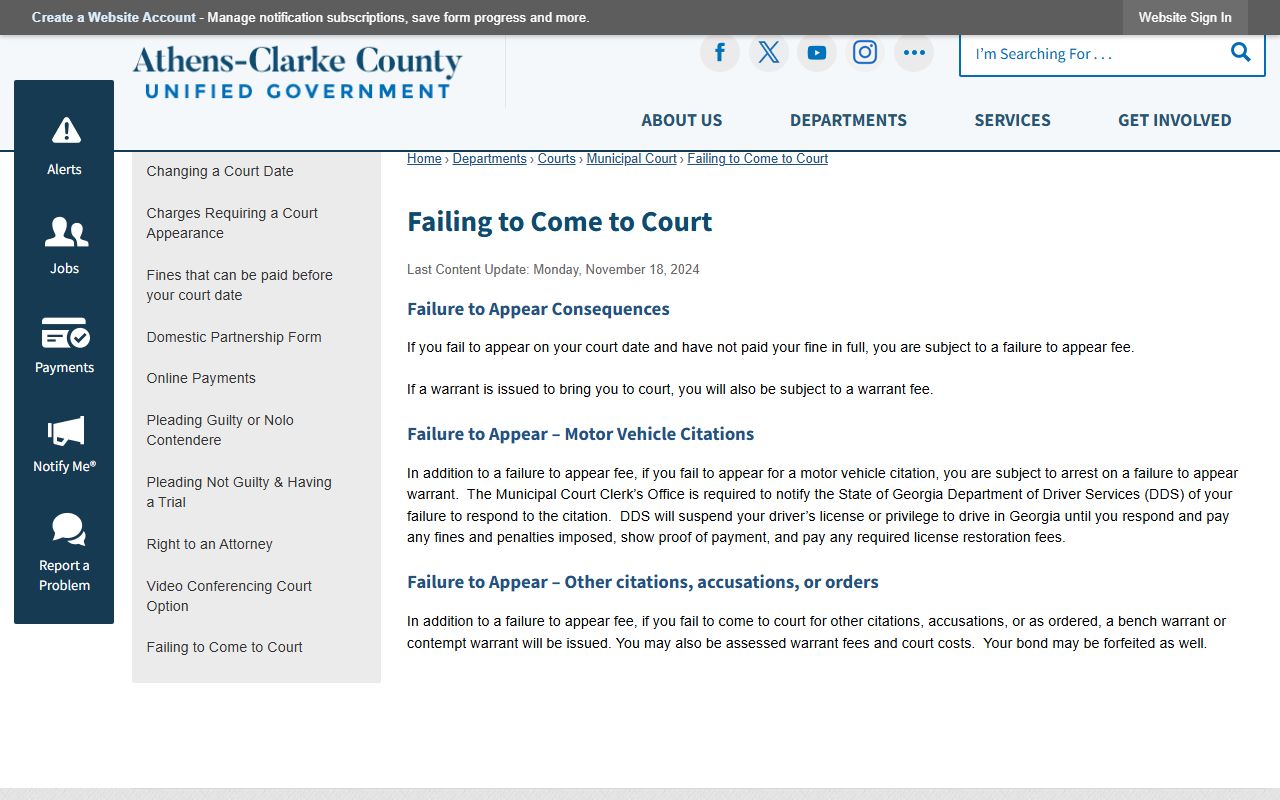
That channel is especially important when a warrant question began as a citation, ordinance case, or missed Municipal Court date.
Resolve Clarke County Warrants
Do not rely on a web list alone before going to court, the jail, or a law-enforcement office. First identify the issuing court. Then call the correct clerk, or have an attorney call, to confirm whether the warrant is active, whether bond has been set, whether a calendar appearance is possible, and whether any related DDS or agency hold exists. For Municipal Court failure-to-appear cases, ask whether the case can be reset, paid, or must be handled in person.
For Magistrate, Superior Court, or State Court criminal warrants, ask whether surrender at the jail, first appearance, bond review, or attorney-arranged court appearance is the proper path. If the person is arrested, the current inmate list may not show the booking until after the public delay. The jail phone line is the better source for hearing time on weekends and holidays.
Important: Attorney contact is prudent before a person appears on a possible active warrant.
Custody Alerts and Limits
Warrant cases often turn into custody questions after arrest. The Clarke County jail roster can show current custody after the public delay, but it is unofficial and displays only the first charge on the public listing. Victims and witnesses may also use VINELink for custody-status alerts where supported. VINELink is a notification service, not a court record and not a warrant-clearance tool.
The national VINELink victim notification system is one custody-notice channel mentioned in the Clarke County research.
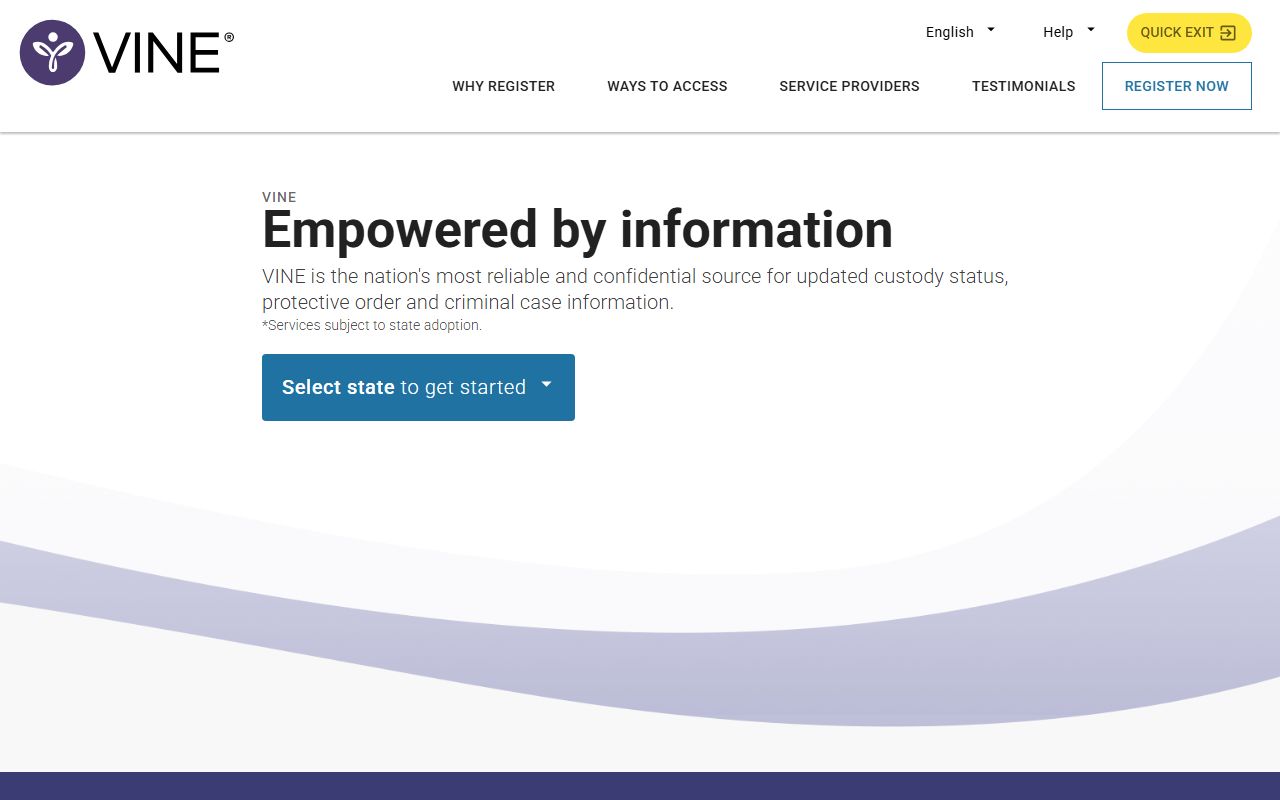
VINELink can help monitor custody changes, while Clarke County warrant status still has to be confirmed with the court or law-enforcement custodian.
Restricted Clarke County Warrants
Some warrant material is not open for routine public review. Search warrants may be sealed while an investigation is active. Juvenile matters are subject to special Georgia access rules. Federal warrants are not county court records, and Georgia sources reviewed did not show a single public statewide warrant database for local users. A most-wanted or fugitive channel is incomplete by design and should not be used to prove that no warrant exists.
Georgia public-records law can support a records request for agency records, but court files and active law-enforcement records have their own limits. If a warrant may have been recalled, cleared, restricted, or tied to a sealed matter, the safest record path is the issuing court, the relevant prosecutor, or counsel with the case number and party identifiers.